
PakEarth Property MarketplaceeMade Simple
A modern property marketplace built to make buying, renting and discovering real estate across Pakistan easier through clear search, useful filters and structured property information.
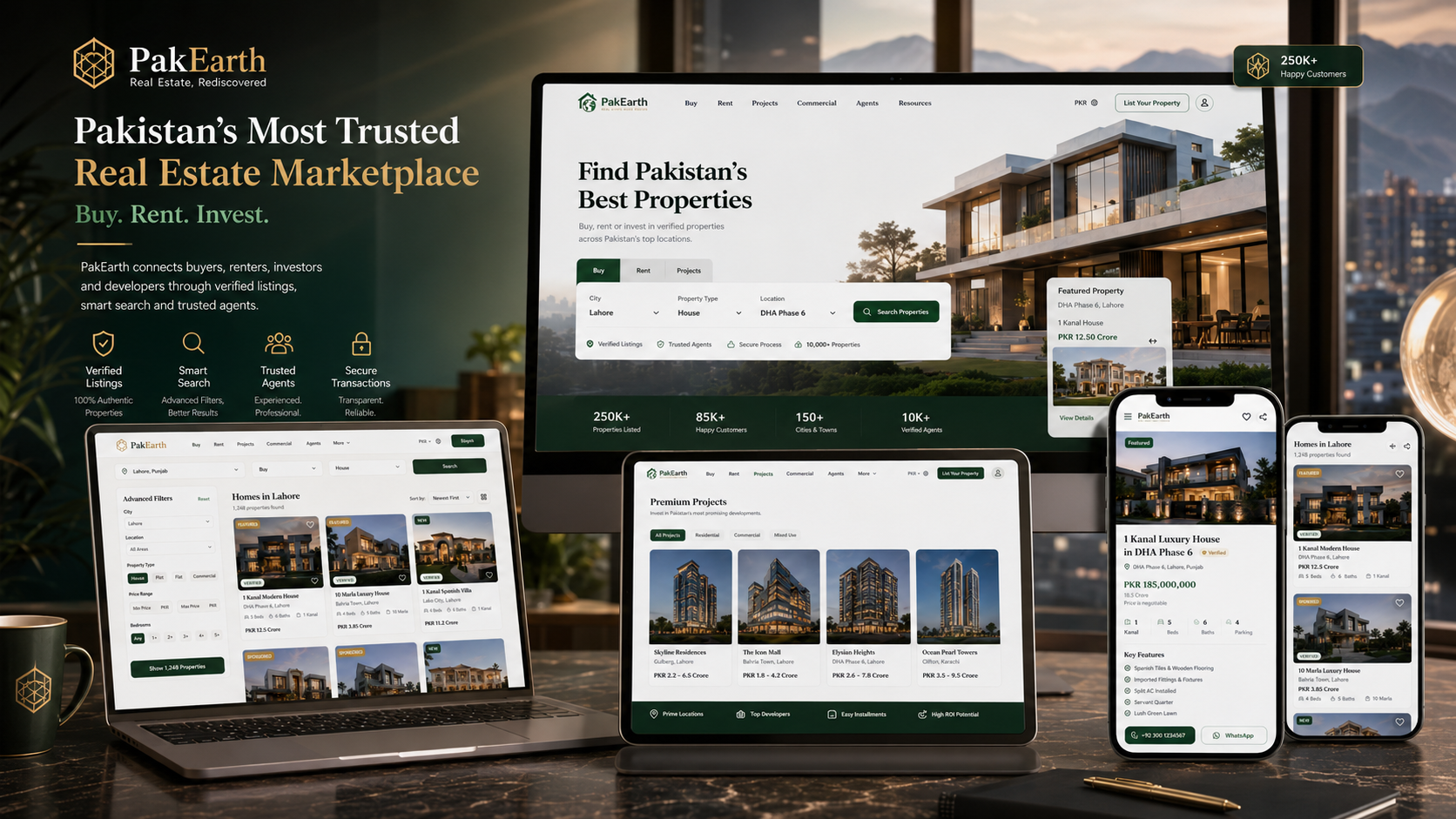
Project Perspective
Finding the right property should not feel complicated.
Property platforms can quickly become difficult to use when too many listings, locations, prices and property types compete for attention. PakEarth was designed around a simpler idea: help people narrow down what they want first, then give them the right information to compare properties with confidence. The experience keeps search, filters, locations and listing details clear so users can move from discovery to enquiry without feeling lost.
Project Snapshot
Role
Full-Stack Developer
Duration
Ongoing
Year
2026
Core Stack
Next.js, Node.js, MongoDB, Tailwind CSS, Cloudinary
PakEarth was built as more than a property listing website. The goal was to create a connected real estate marketplace where people can discover properties, estimate important costs, send enquiries and where property teams can manage those opportunities through structured internal workflows.
Making property discovery easier
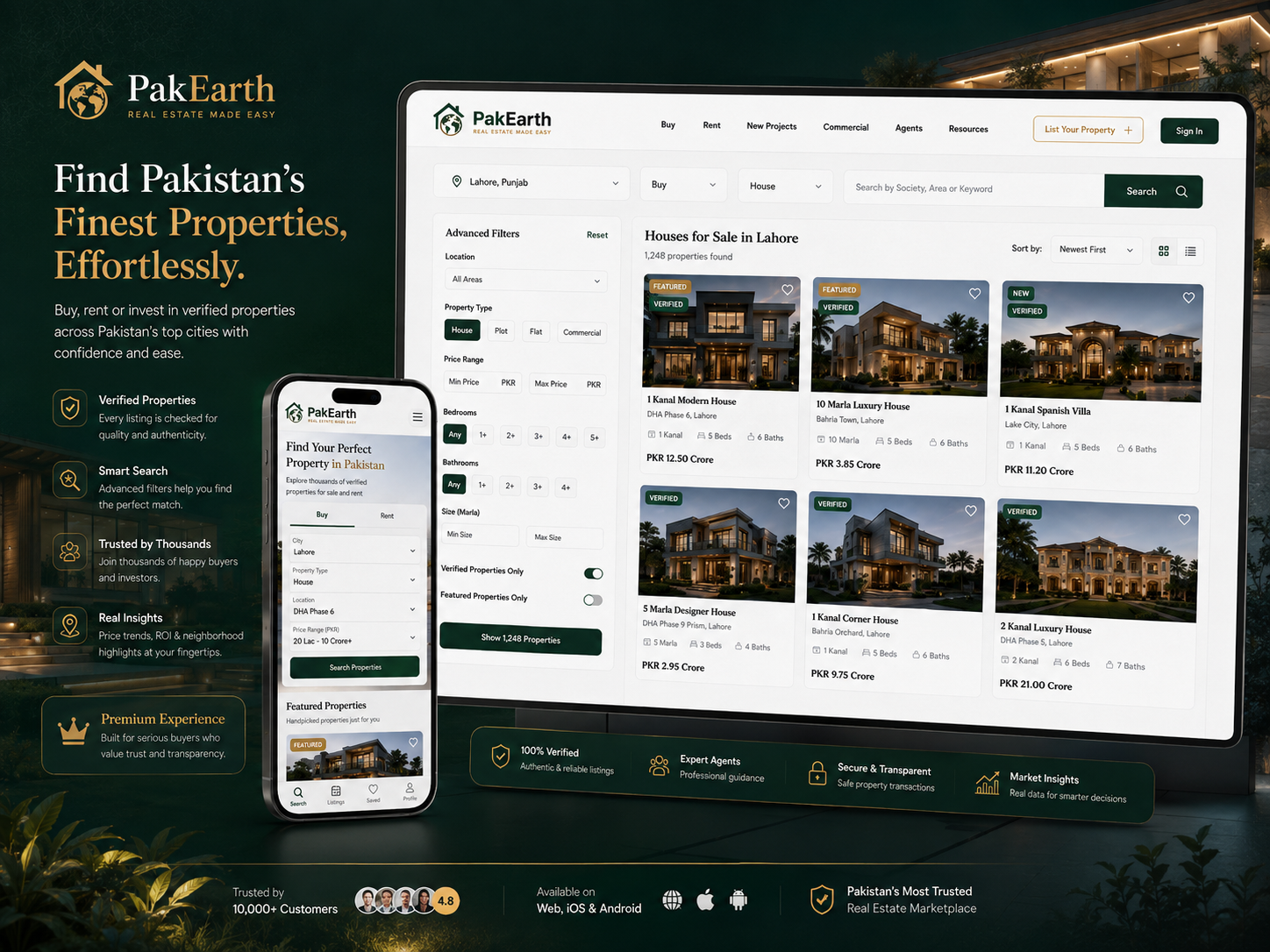
Property search can quickly become difficult when users have to move through hundreds of listings without enough structure. PakEarth separates buying, renting and project discovery while allowing visitors to narrow results through location, property type, price range and area.
This gives users a clearer starting point. Instead of showing everything at once, the platform helps them move from a broad requirement toward properties that better match what they are actually looking for.
A useful property marketplace should help people understand a decision, not simply show them more listings.
Useful tools before the enquiry
Property decisions often involve calculations that users normally have to perform on separate websites or spreadsheets. PakEarth brings practical real estate calculators directly into the platform so users can understand important numbers without leaving the property journey.
The Construction Cost Calculator helps users estimate the possible cost of building a property based on information such as covered area, construction type and relevant cost assumptions. It gives users a quick financial reference before they move further into planning.
The Area Unit Calculator makes it easier to convert common property measurements between units. This is useful in a market where property sizes may be discussed using square feet, square yards, marla, kanal and other units depending on the location and property type.
The EMI Calculator helps buyers understand possible monthly financing payments by working with values such as property amount, down payment, financing period and interest rate. Instead of only seeing the total property price, a buyer can get a clearer idea of what the financial commitment could look like each month.
Calculator results can also be exported as a PDF file. This gives users something they can save, review later or share while discussing a property, construction plan or financing decision.
Authentication built around real roles
The platform uses authentication and role-based access to separate public experiences from internal business operations. Visitors can explore the marketplace and use public tools, while authenticated team members receive access according to their responsibilities.
Instead of giving every logged-in user the same dashboard, PakEarth was structured around different operational roles so each person sees the information and actions relevant to their work.
Three dashboards, three responsibilities
The internal platform is divided into three main dashboards: Super Admin, Agency Admin and Property Agent.
The Super Admin has platform-level visibility and control. This role can oversee listings, users, marketplace activity, access and the wider operation of the platform.
The Agency Admin focuses on the agency workflow. Incoming leads can be reviewed, organized and assigned to property agents, giving the agency a central place to understand opportunities and coordinate its team.
The Property Agent dashboard is designed around daily sales activity. Agents can work with assigned leads, review buyer requirements, add follow-up information, schedule property viewings and keep each opportunity updated as the conversation progresses.
Turning enquiries into structured leads
PakEarth does not end the user journey when someone discovers an interesting property. An enquiry can capture useful information such as the buyer's contact details, interested property, preferred location, property type, budget and buying intent.
That enquiry becomes a structured lead instead of remaining a simple contact message. The agency can understand what the buyer needs, assign the opportunity to an appropriate agent and continue the conversation with better context.
Agents can then manage follow-ups, notes, viewing schedules, lead stages and activity history. This creates a clearer path from browsing a property to an actual sales conversation.
More than a listing website
PakEarth supports several kinds of marketplace activity including properties for sale, rental inventory, real estate projects, sponsored inventory and direct property publishing. These experiences were designed to work inside one connected product instead of becoming separate disconnected modules.
Structured property data also makes it easier to support residential, commercial and other property categories while maintaining a consistent search and discovery experience.
Built for continued growth
The platform was approached as an evolving product rather than a fixed collection of pages. Property discovery, calculators, authentication, role-based dashboards, lead management and structured marketplace data provide a foundation that can continue growing with saved searches, alerts, richer agent profiles, analytics, recommendations and smarter property discovery.
The result is a system where users can discover a property, understand important financial and area information, submit an enquiry and move into a connected business workflow where the property team can manage what happens next.
Product Principles
4 decisions shaped the experience.
01
Start with intent
Users can begin from what they actually want to do, whether that is buying, renting or exploring real estate projects, instead of entering one large mixed listing feed.
02
Keep search clear
Location, property type, price and area are treated as practical search tools that help users reduce choices without making the interface feel heavy.
03
Build user trust
Property information, images, pricing and location details are presented in a clear structure so visitors can understand a listing before deciding to enquire.
04
Support marketplace growth
The product structure supports regular listings, sponsored properties, real estate projects and direct property publishing without turning each feature into a separate experience.
System Thinking
Built for Growth.Beyond Listings.
PakEarth was structured as a growing marketplace rather than a fixed property website. Property data, locations, categories, projects and user actions are kept as reusable parts of the system. This creates room to add stronger agent tools, saved properties, alerts, dashboards, recommendations, analytics and smarter property discovery later without rebuilding the core platform.
Clearer property discovery across multiple cities and locations
Dedicated journeys for buying, renting and project exploration
Reusable property structure for residential and commercial listings
Support for sponsored properties and real estate projects
Direct property publishing as part of the marketplace flow
A scalable base for future agent and buyer features
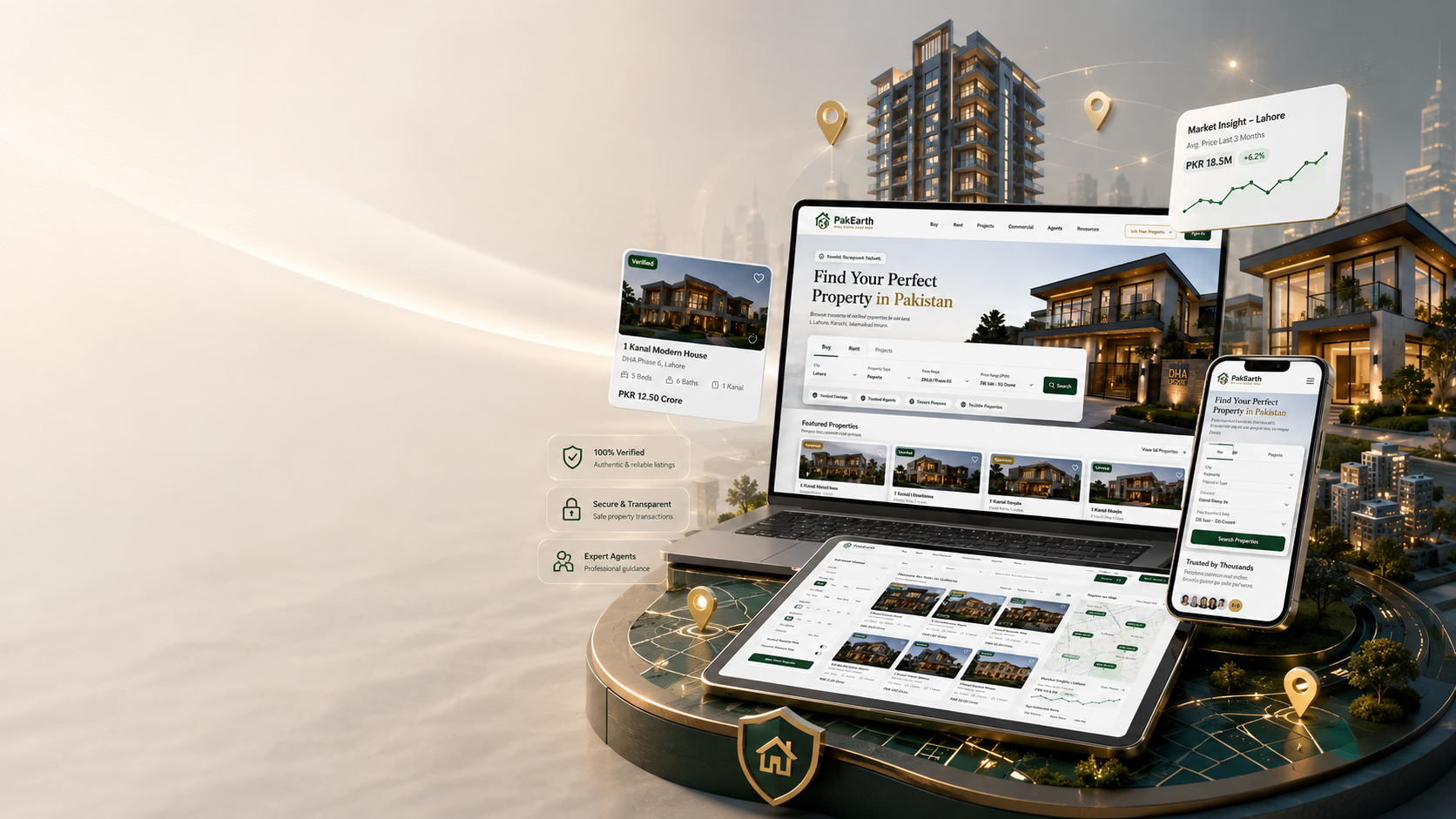
Final Outcome
Property Search Simplified.Across Pakistan.
PakEarth brings property discovery, projects and marketplace activity into one clearer experience, giving users an easier way to explore real estate while creating a stronger digital foundation for future growth.
Start something similar
Want a similarplatform, website or service?
If you have an idea, an existing product that needs improving, or a platform worth building properly, tell me what you are working on.
Next Project